Research
This is research driven by genuine fascination – and a belief that the dreaming mind deserves more attention than it gets.
Lucid Dreaming Research
Alongside my work as a counsellor, I have a keen interest in research into lucid dreaming – particularly with regards its potential relevance within therapeutic practice. A lucid dream is where you have an awareness that you are in a dream, and may have the ability to exert some control over it.
The lucid dream experience raises fascinating questions around consciousness, reality, and psychological processing – it is an area I have been studying and writing about for several years. Part of counselling practice involves maintaining a curiosity about the human experience, and my research in lucid dreaming feels like a natural extension of that.
Published work
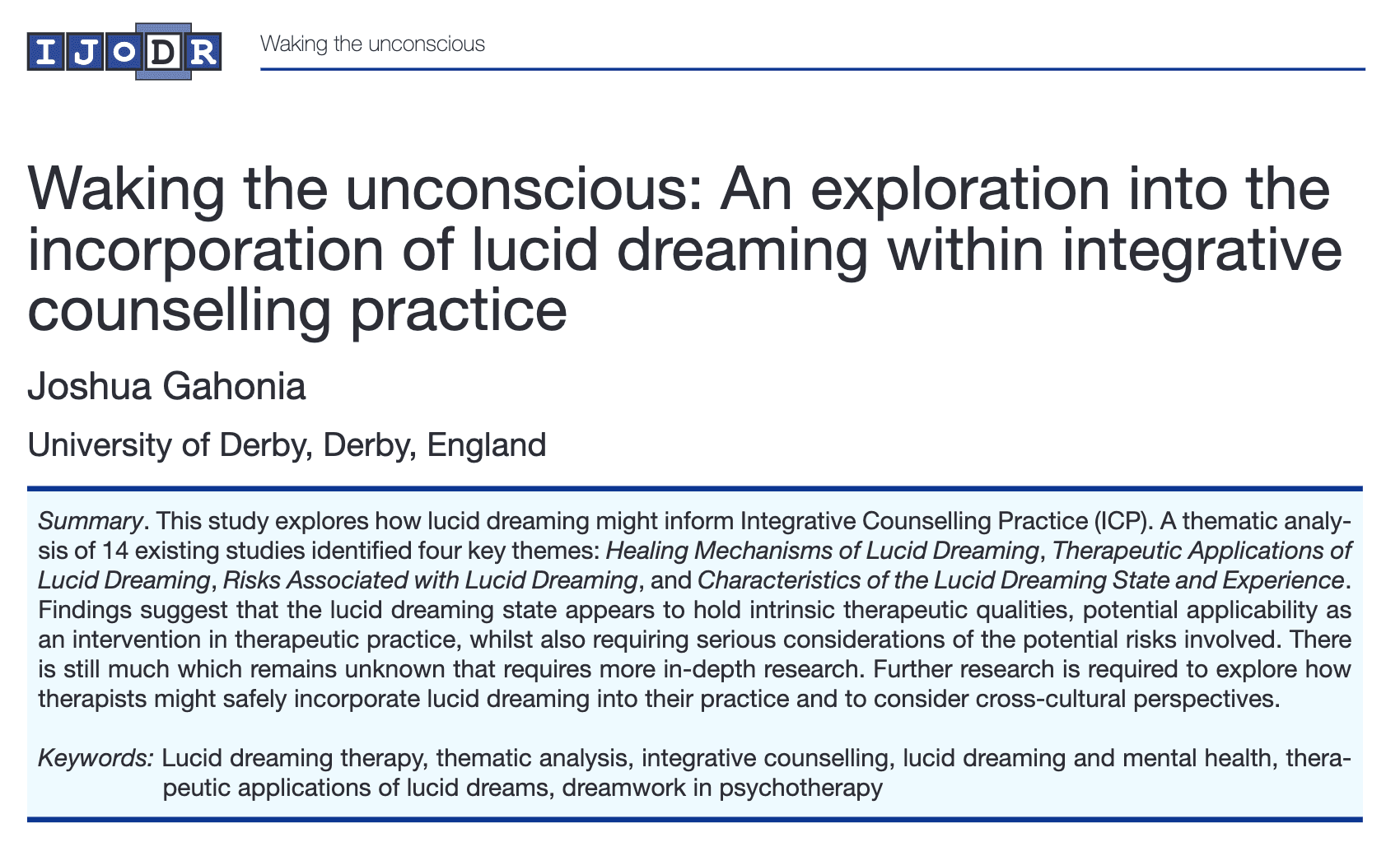
International Journal of Dream Research · 2026
Waking the Unconscious: An Exploration into the Incorporation of Lucid Dreaming within Integrative Counselling Practice
My MSc dissertation investigated how lucid dreaming might be understood and utilised within integrative counselling practice.
The research explored the possible therapeutic effects of lucid dreaming, along with the risks associated. Some of the themes that emerged were the development of coping mechanisms for fear within the dream state, meaningful engagement with symbolic representations of one’s psychology, and encounters with the transcendent (experiences that go beyond what is considered ‘normal’ reality).
The findings suggest that the “lucid dreaming state appears to hold intrinsic therapeutic qualities, potential applicability as an intervention in therapeutic practice, whilst also requiring serious considerations of the potential risks involved”.
Where the research is heading
The findings of this work have opened up a variety of questions on the topic:
How do therapeutic practitioners currently understand and engage with lucid dreaming in their clinical work?
How do we better understand and assess the risks associated with lucid dreaming in therapeutic practice?
How do our worldviews, framing of reality, and cultural perspectives influence our lucid dream experiences?
So many interesting avenues. The next logical step following the dissertation would be more direct exploration – through in-depth conversations with practitioners about their experiences, perspectives, and approaches.
This is an underexplored area of the literature, and one that I find both professionally and personally compelling.
Talks and presentations
I have presented this research beyond the academic setting and have been invited to speak in a number of contexts.
Charlie Morley’s Masterclass for Lucid Dreaming Facilitators 2025 Training
Charlie Morley is a best-selling author, two-time TED speaker, and one of the world’s leading teachers of lucid dreaming – known particularly for his work with PTSD and trauma-affected sleep.
Charlie invited me to deliver a Masterclass, sharing the research findings with an audience of practitioners actively working with lucid dreaming.
University of Derby
I was invited by the lecturing staff of the MSc Integrative Counselling & Psychotherapy course at the University of Derby to deliver a two-hour session with postgraduate student, discussing the research process – from building a research proposal through to dissertation writing.
Additionally, I delivered a lunchtime seminar to researchers and academics at the university, presenting the findings and broader research questions that emerged from the work.
I aim to respond to all enquiries as promptly as possible.