I recently rewatched one of my favourite films - Arrival. This isn't an article about why I love Arrival (it's about time, language, love, humanity, and has aliens in it... what more can you want really), but rather to share a realisation I had during one particular scene.
[Disclaimer – there will be spoilers here. If you haven't watched the film, I encourage you to do that as a number one priority. Forget reading this article or the next thing on your to-do list, this is a required watch for any movie lovers...]
In this scene I saw what was for me, the closest visual representation of the experience of lucid dreaming I have seen on screen. Lucidity1 is difficult to put into words - its intensity, complexity, and strangeness, combined with the limits of language itself when describing experiences beyond the everyday – might explain why.
1 Used in this context means becoming aware of your experience whilst in a dreamThis is a scene that has always created a strong, visceral connection with me. I feel a mix of floaty elation in my chest, a fearful knot in my stomach, and an exposed sense of proprioception. This was the connection. I had felt remnants of this feeling before. In a lucid dream.
Consumed by an overwhelming desire to document that overlap, I began writing. This is the result.
The veil
Almost every time I describe to people my first ever lucid dream, I use the imagery of the veil lifting. I usually explain how I didn't believe lucid dreams were real when I first read about them, but I was intrigued so I gave it a go. I kept a dream journal. I did reality checks2 until they were a daily waking habit. And then it became such a habit that I did one in a dream. That is the moment the veil lifted. I stepped into the dreamworld with awareness, for the first time. I had entered a world which I did not know existed (or could exist) until that moment.
2 A reality check is "a lucid dream induction approach where a person trains specific cognitive tasks during the day to better differentiate between their sleep and waking state during subsequent dreaming" (https://www.iomcworld.org/open-access/cognitive-neuroscience-of-lucid-dreaming-introducing-a-new-reality-check-induction-protocol-dream-consciousness-study-94769.html)The crossovers with the movie here are quite striking. Amy Adams' character, Dr Louise Banks, is driven to take a solo trip into the alien spacecraft. Both ours (as the audience) and her experience with the aliens up until this point were through the clouded screen aboard the ship.
Louise takes a different approach to the spacecraft than usual. A capsule encompasses her. She is covered in complete darkness. The screen goes black. She is visiting the aliens again, but this time it's different.
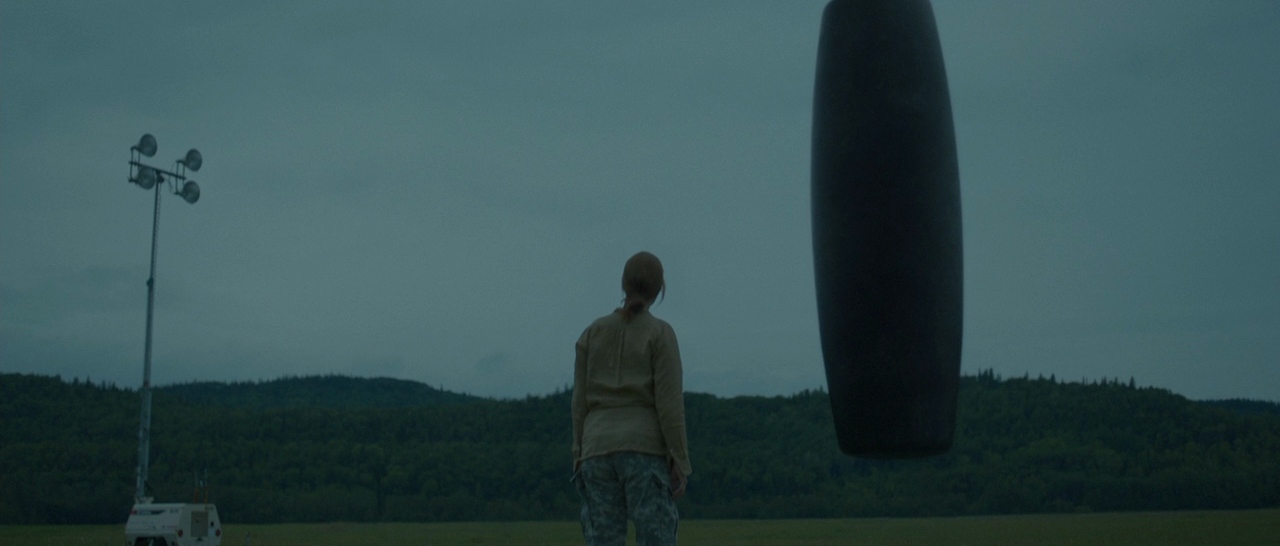
The capsule splits open. She enters a new realm. The atmosphere of the scene bleeds into your living room. This is the veil lifting. This is the crossover into a new, unknown space.
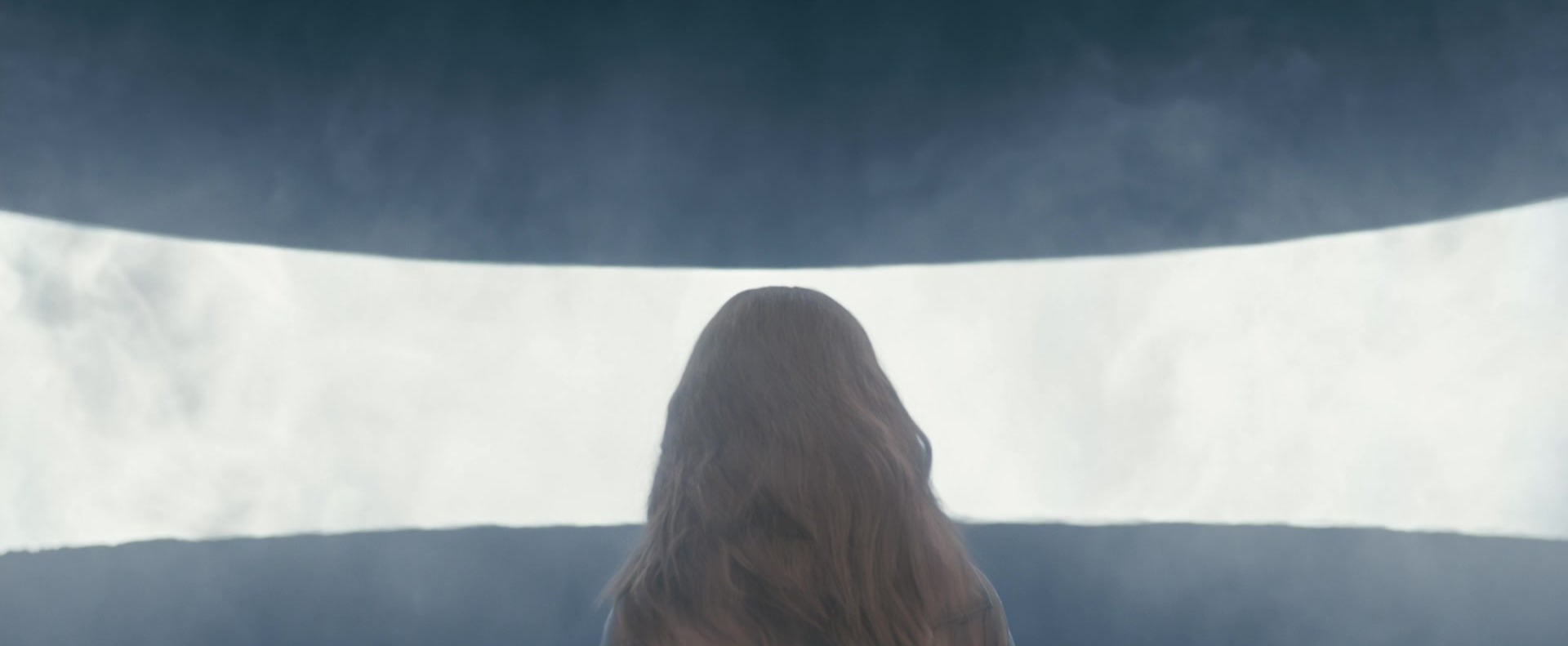
The resemblance here to entering the lucid dream state is uncanny. Imagination, intellectual understanding, anticipation – none of it fully prepares you for the stark reality of becoming lucid. Whilst the movie uses the capsule as a vehicle for Louise's transition from the 'real' world to the 'alien' world, the analogous object for lucid dreaming might be the hypnagogic state. The transitional state (often marked by visual, auditory, kinetic sensations) that sits in between wakefulness and sleep. This is what delivers us from one to another. Awake to asleep. A path we traverse, often without thought, memory or awareness, every night (unless we are suffering from insomnia). The practice of reaching lucidity asks us to see what it might be like to walk this path with our eyes wide open. Our full awareness intact.
The capsule unsealing mirrors the practical experience for me entering my dream lucidly for the first time... but what did that actually feel like?
This is where we are greeted by 'hyperreality'.
Hyperreality
[Just to clarify. When I talk about hyperreality here, I am using it in the sense as defined within the Merriam-Webster dictionary, rather than the sociological concept coined by French theorist Jean Baudrillard in his 1981 book Simulacra and Simulation. Here it is simply used to describe an experience "marked by extraordinary vividness".]
Louise's hair trails and floats unnaturally above her as she lands in the new space. As viewers we know instantly this space has different rules. Gravity, the atmosphere, is not the same. Clouds surround and engulf her body. The absence of objects leaves her orientation suspect.

Where are the edges of this space? Where does the mist end? A bombardment of novel circumstance and sensation – each of which leads to a conflagration of questions. Utter shock and amazement. When the veil lifted and my conscious awareness walked into the lucid world, this is what I met first. My scepticism around this phenomenon even being possible, probably had some role to play in this... It's safe to say my scepticism vanished in an instant, and what replaced it was a new set of curiosities. Placing that aside for now, following the shock of the initial presentation of the lucid state, came the sensation.
The feeling. Heightened. All of it. Simultaneously. The atmosphere prickled the hairs on my skin - each minutia of breeze that slalomed through each individual hair on my forearm. Every cloud, tree, leaf in the sky and garden before me shone clear with an effervescent glow. If waking life was 1080p high definition, this was ultra-high definition 4k. This was a common theme that arose in my research into lucid dreams – experiences commonly described as feeling more real than real.
[This would be an interesting place to stop and begin thinking about how we define 'real' in this context, what influences our perception of 'real' experiences, what happens with these ideas as we sit at the intersection of waking, sleeping, and dreaming. But that's a thread for another time and place.]
Denis Villeneuve gives us an extended, close-up shot of Louise's face as she attempts to adjust to her new, alien environment.
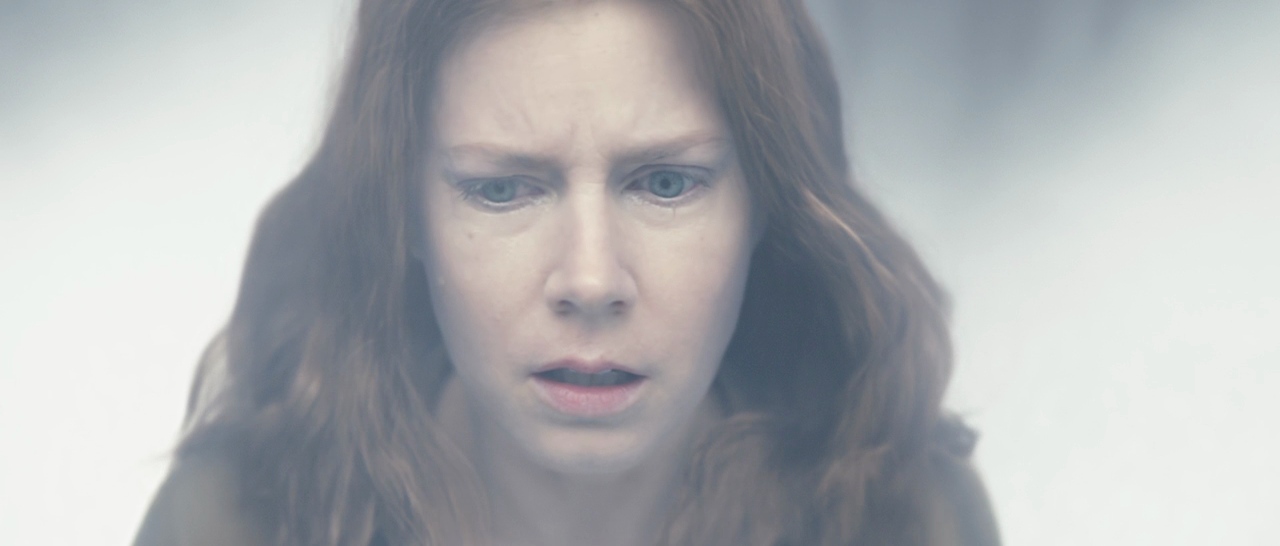
Her features are vivid. Her movements take on a slightly warped, CGI-type quality. Something about her has shifted. We hear her breath, almost like we are inside her head. What I saw in this shot was an adjustment, a re-learning or re-experiencing of senses, which echoes a step into lucidity.
Dialled up senses and vividness can take a desolate turn when we accept that dreams can also become nightmares.
Lucid nightmares
I mentioned at the start of this piece "an exposed sense of proprioception" that linked my lucid experience with this scene – this is the part where this becomes relevant.
A few months after my first experience of lucidity, I became lucid once more, through the same reality check method (this was probably my third or fourth lucid experience at the time). Only this time the veil opened, and I appeared to be in a nightmare. It hadn't occurred to me that this was a likely possibility. I learned quite quickly in that moment that the increased vividness, amplified emotion, more real than real feeling didn't just relate to flying around a lucid dream in a state of euphoria. All the aspects of hyperreality apply also to fear and terror. Pitch black, stood, draped in a carpet of darkness which extends to... infinity? Out there in the dark you feel, you hear, you sense the danger which can morph, show, behave in ways only limited by your mind's ability to create. Now the question of 'what is truly real?' impresses itself upon you. This is just a dream, but what does that mean now that 'I'm' here? Now that I can feel it all. Do I remember what I read about how to escape/stop/transform lucid nightmares? Even if I did, can I employ it whilst a concentrated fear boils my skin? For me, this is where I find words tend to fall short of relaying these experiences...
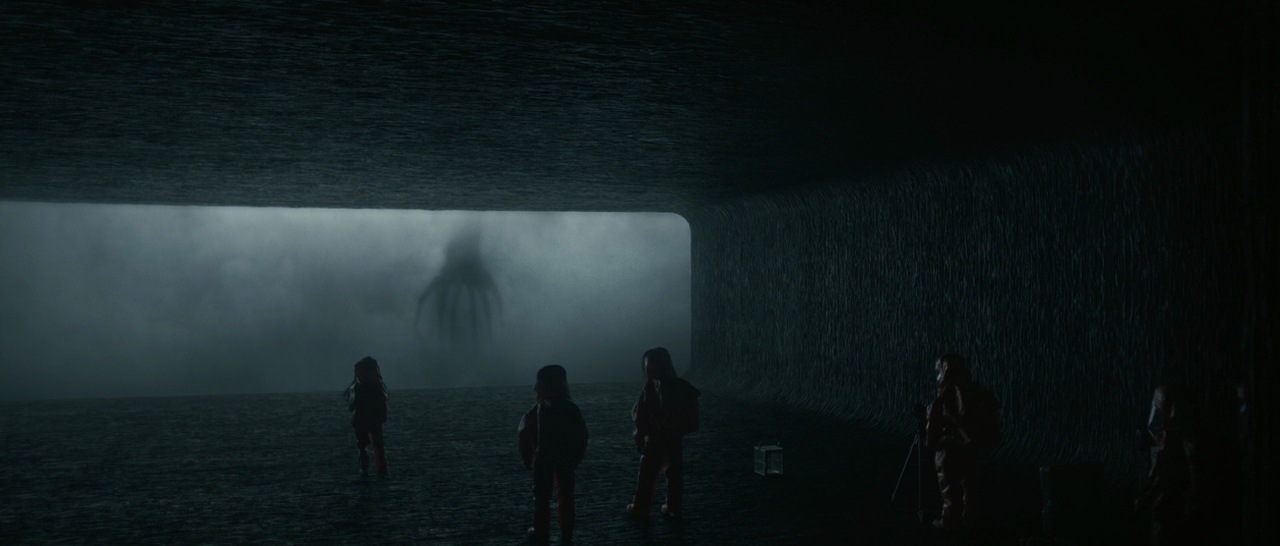
... so, I find myself watching Louise, stood in a vast, ceaseless space. The film shows us parts of this space. Empty now, but is it empty entirely? What lies behind the mist? A dark shape floats past in the distance.
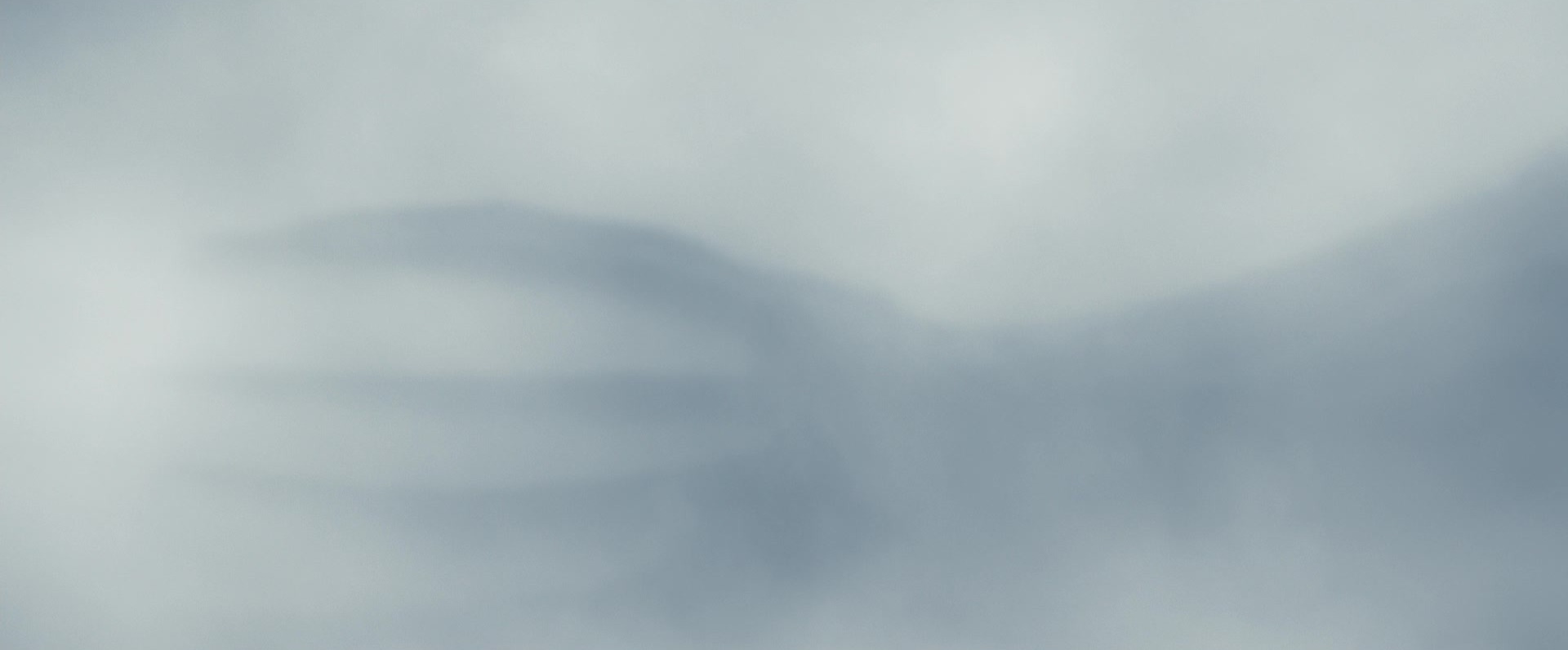
We can't quite tell if it is in the distance though. Or where it is in relation to Louise. We are hit with the icy dance up our spine. It lurks over our shoulder.
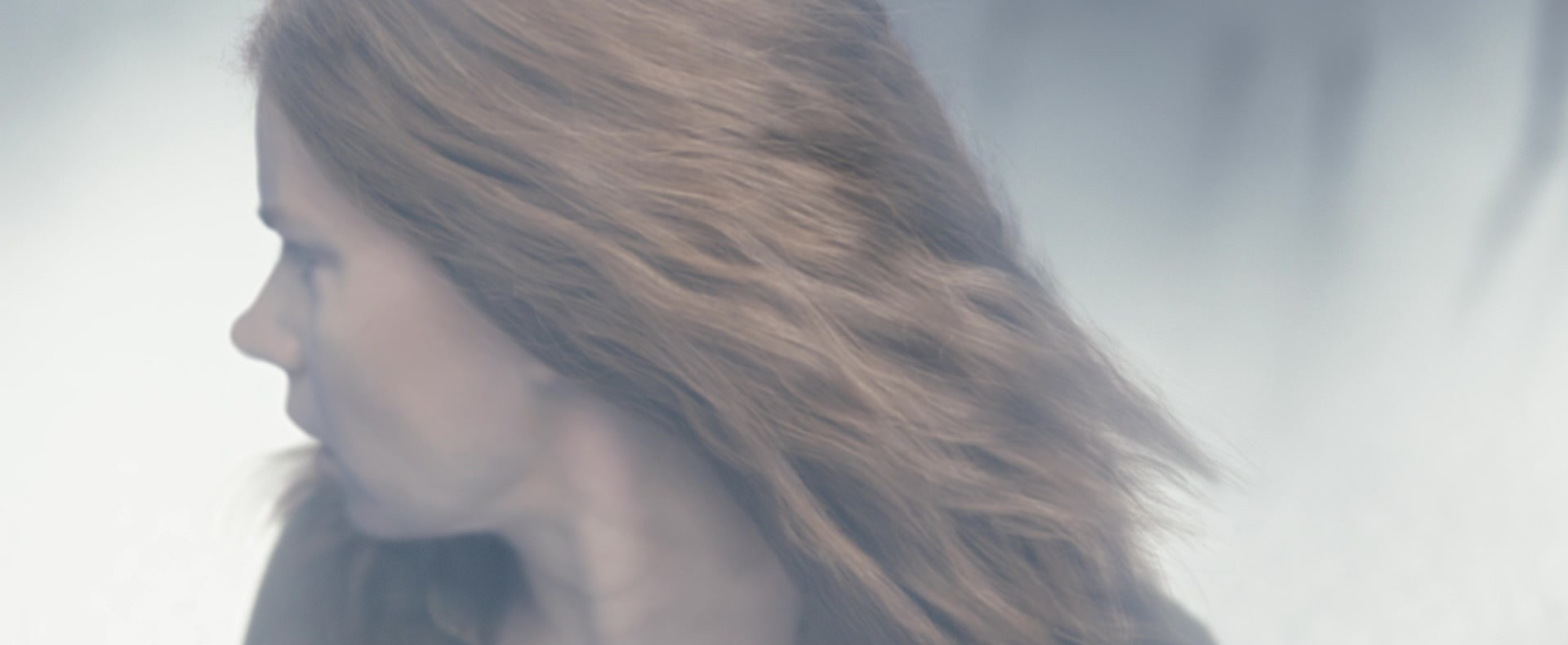
Louise is no longer stood behind the screen which once separated her from this space and these entities (I wonder if that barrier now feels superficial to her?). She is no longer wearing her protective suit. Due to her unusual arrival in this space (which we discussed earlier), she no longer knows how to leave. The most apt words I'm left with here are trapped and exposed.
Feeling trapped within a lucid nightmare was one of the potential risks highlighted within my research. It appears to be an experience that has been reported by many. It can add cautiousness to how I talk about lucid dreams, along with moments of hesitancy and apprehension when attempting to achieve lucidity (it has outright put me off lucid dreaming practices at times in my life). I don't believe this to be the entire story – encountering fear within lucid dreams can have potentially transformative, even transcendent qualities, which we'll come to shortly. But as both a therapeutic practitioner researching this field and someone who has had some pretty scary lucid experiences, I feel anyone engaging with these practices for the first time ought to be aware of the potential for these kinds of experiences.
I am reminded of a quote from the sometimes visionary, sometimes delusional Don Quixote - "forewarned is forearmed". Granted, in his case this meant donning a helmet full of cottage cheese and charging towards a lion... but I think the sentiment still rings true.
Transcendent experience
'Transcendent' – something that "goes beyond normal limits or boundaries, because it is more significant than them".
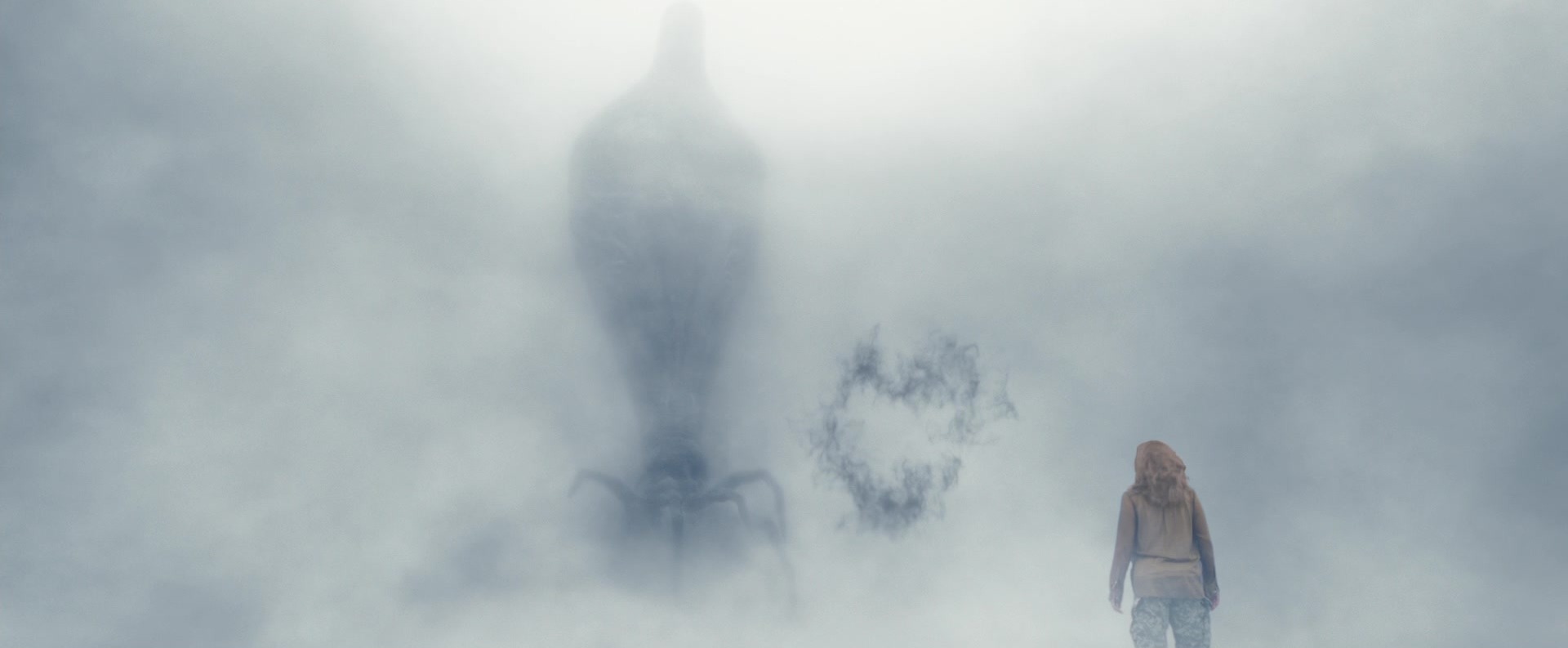
In the movie, we are treated to a stunning wide shot. Louise finally encounters the being.
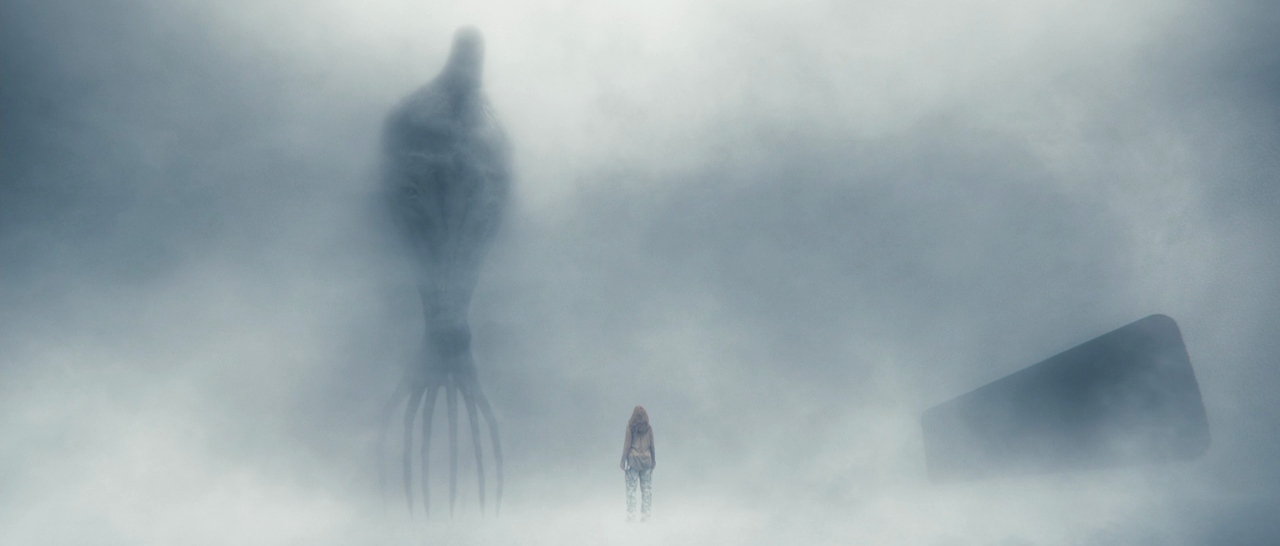
The gravity of the moment cements us in our chairs. Obviously, I can't know what is in Louise's mind in this moment, but I think it's probably safe to say that one of the words she may use to describe this encounter with the alien (and all that led before it), is transcendent. It is quite hard to imagine how she may be feeling here, stood a few arms' lengths away from the being she has been studying from a distance until now.
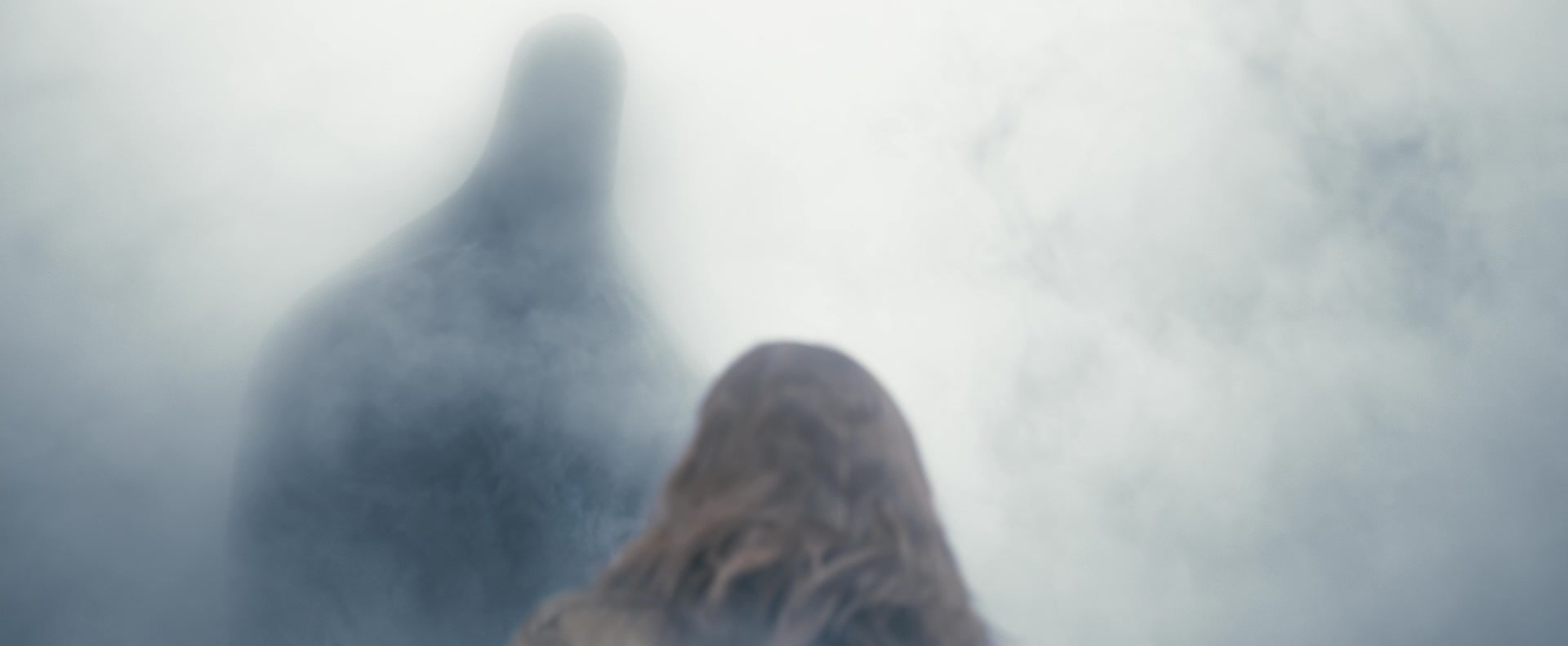
As I view this part of the scene through my lens of lucidity, the alien doesn't necessarily represent a single object or thing within a lucid dream but rather encapsulates an experience. What is it like to find yourself in a world or reality you did not know existed? How does it feel to encounter that, which was only just before, quite beyond your comprehension and understanding? These questions point towards what we are grasping at with this phrase, the 'transcendent experience'. This formed a sub-theme within my research findings – these kinds of experiences appeared frequently and seemed to hold significance for those who reported them. What these experiences mean and how they impact us invites complexity, as we delve even further into the world of the unknown, the spiritual, the mystical. All of which re-ignite our questions around reality within the lucid state.
Transcendent experiences are nothing new. Whether it's the rhythmic drumming of shamans, dissolution of the ego through meditative practices, or total absorption in creative flow states, our history as humans is rife with attempts and practices designed to reach these experiences. Lucid dreaming sits within this ancient lineage – a practice recognised across various traditions, from Tibetan dream yoga to indigenous shamanic practices.
[There is an interesting throughline here when discussing these experiences in the context of therapeutic usage, specifically in the re-emerging field of psychedelic-assisted therapy. It appears that a significant determinant of this practice includes the facilitation of mystical experience. Put more accurately – "The mystical experience is a potential psychological mechanism to influence outcome in psychedelic therapy" (https://pmc.ncbi.nlm.nih.gov/articles/PMC9340494/). I touched on this briefly within my research (section 4b, p.57) but remains an area I would love to return to in more detail in the future.]
We are probably all familiar with the quote, often attributed to 17th century English clergyman Thomas Fuller, that "seeing is believing". But only recently did I learn the full version of this quote is "seeing is believing, but feeling is the truth". This leads us naturally to our next and final section. We have seen now, and stand directly before the unknown, the previously incomprehensible – what happens when we interact with it?
Engagement, communication, and transformation
Louise stands tall. Face to face with the imposing figure. Her shoulders are back. She is open to receive whatever comes her way. Dialogue now begins.
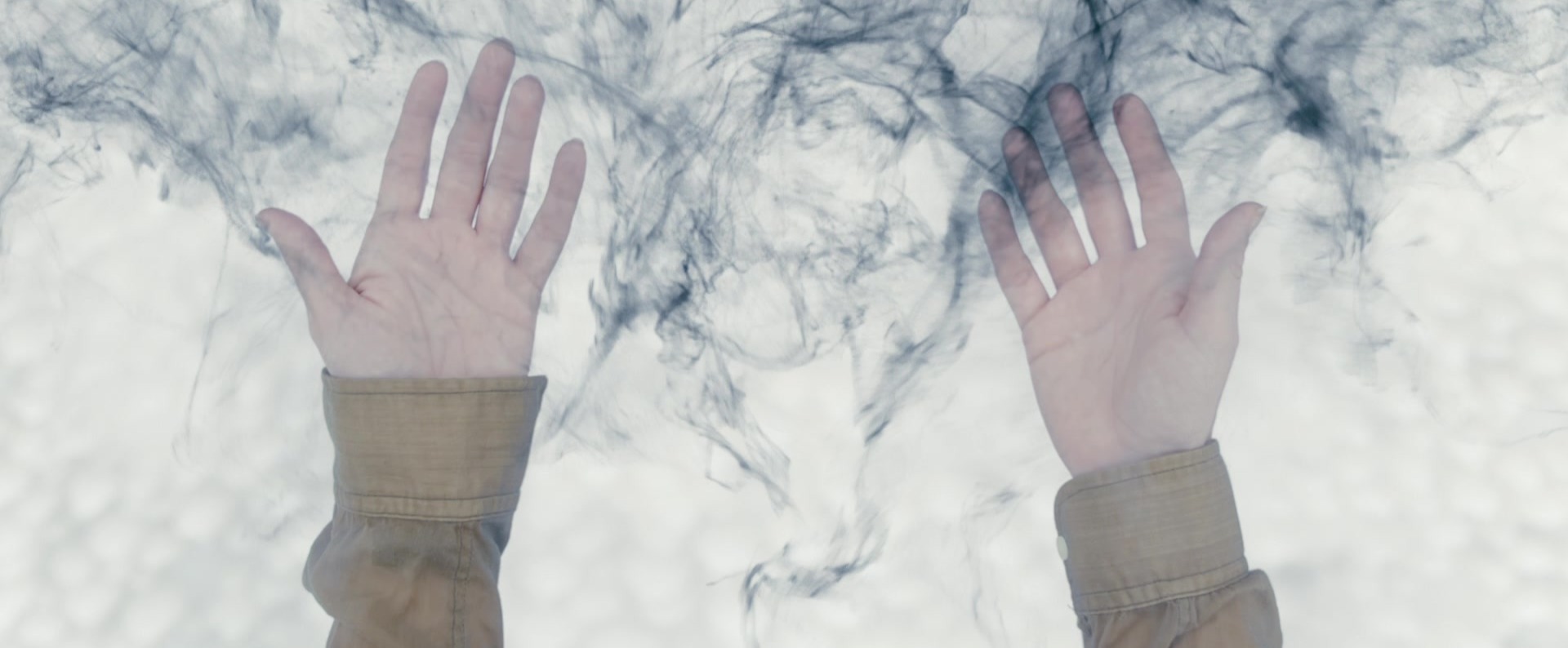
The entire movie up to this point has been us following the efforts of a linguist to decipher an unknown language, containing an unknown message. With observation, study and reflection from behind the clouded screen, the interpretation has begun to grow and improve, but with great difficulty. However, now the dialogue is different. The communication is visual, auditory, and tactile. The language seeps over her hands.
The text on the screen shows us that Louise knows what is being said. She understands and receives what is shared with ease and fluidity. Now the message from the unknown can be heard.
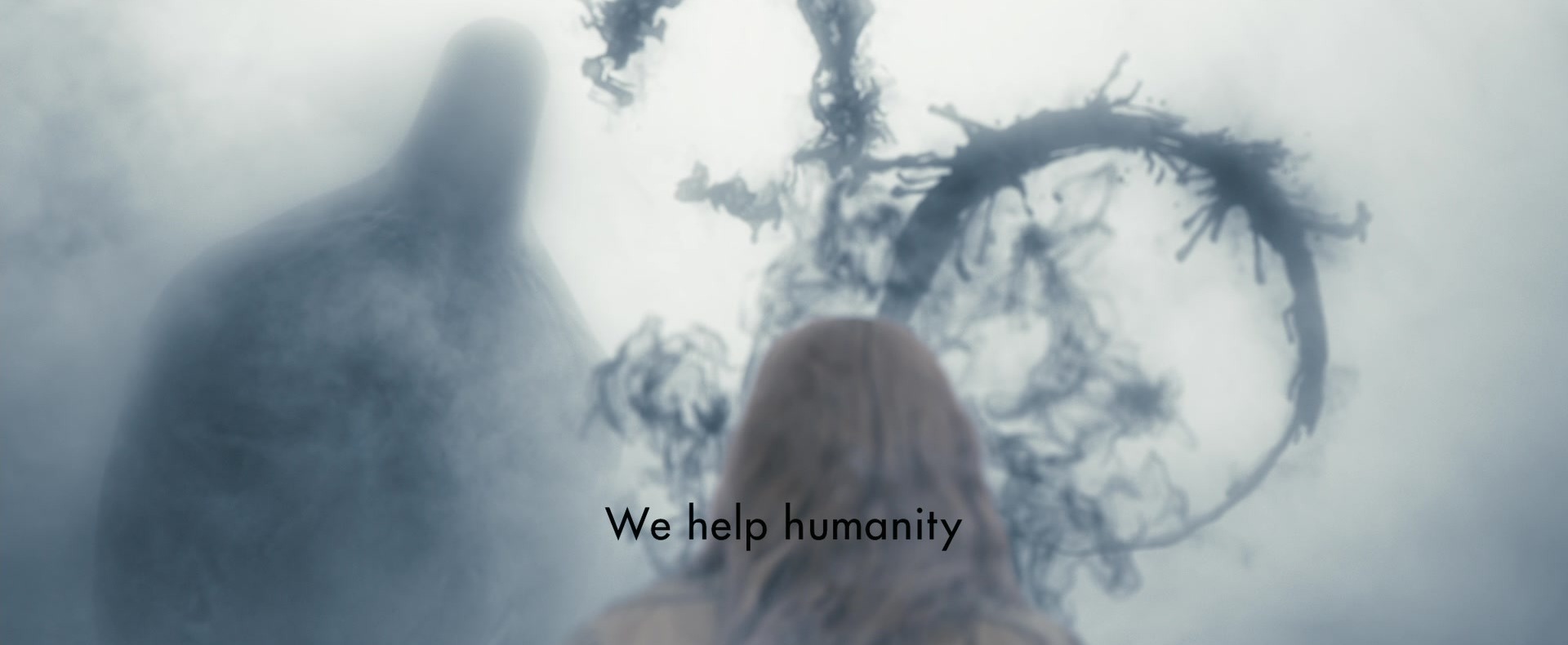
It is revealed.
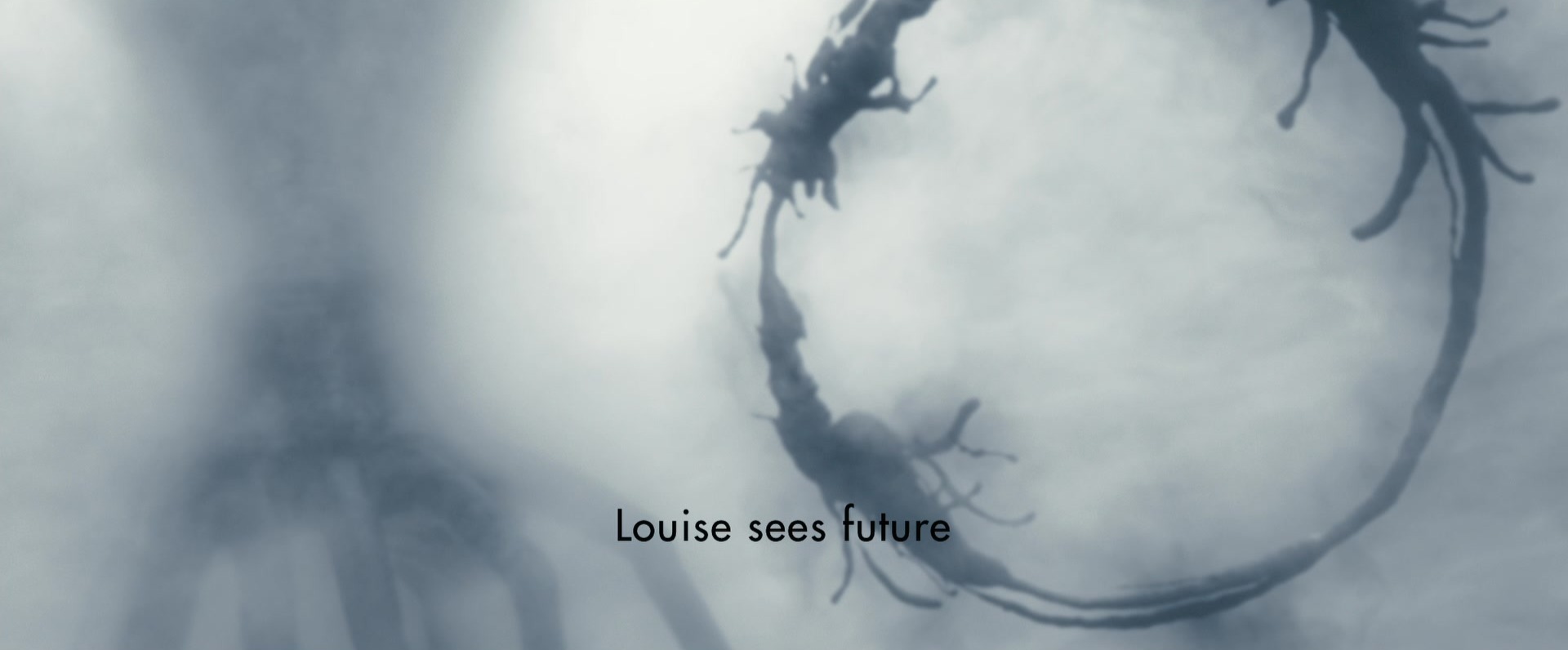
Following the comparative weave made so far between this scene and the lucid experience, I cannot help but think of the dark alien figure as analogous to the concept of the unconscious within dreams. There is a lengthy, storied history to this relationship - our dreams as symbolic messages from deeper parts of our psyche (it is also something I often feel is intuitively assumed by people when discussing dreams).
Rather than getting lost in a discussion of what the unconscious is, I want to stay with what people report from lucid dream experiences. My research kept returning to threads along these lines – gaining of new insights, emotional processing, and transformative engagements with unfamiliar parts of themselves. These experiences were also often framed in terms of a narrative structure and ongoing healing journey – the dream is a river, carrying messages and symbols to our shores.
The word dialogue keeps coming back to my mind in this context. What would it be like to begin a conversation with unconscious aspects of ourselves? What might happen when we enter this unknown world with our eyes open and awareness intact?
What will our aliens say when we start asking questions?
All stills are from Arrival (2016), directed by Denis Villeneuve, © Paramount Pictures. They are reproduced here in low resolution solely for the purpose of criticism and review under fair dealing (UK) / fair use (US) principles. No copyright infringement is intended, and no ownership of these images is claimed. If you are a rights holder and have concerns about this use, please get in touch and the images will be removed promptly.